
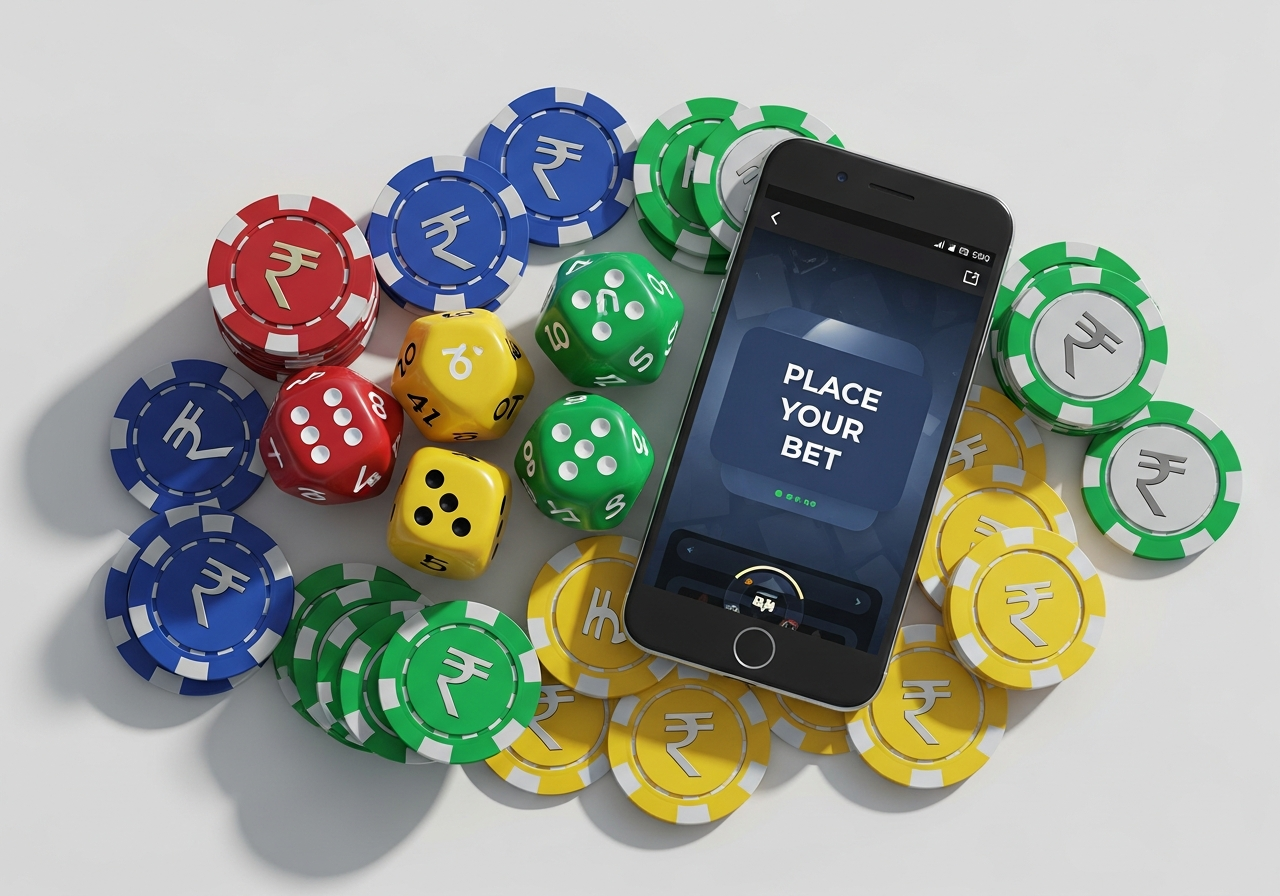
Online dice games have become increasingly popular among Indian players seeking entertainment and the chance to win real money. Whether you’re curious about traditional games like Jhandi Munda and Sic Bo, modern crypto dice platforms, or skill-based competitions, understanding how these games work, where to play safely, and what India’s complex legal landscape means for you is essential before placing your first bet.
This guide covers everything a beginner needs to know about playing online dice games for real money in India. We’ll explain the different types of dice experiences available, walk you through the legal considerations, help you identify trustworthy platforms, and provide practical strategies for responsible play. Our focus is on safe, informed gameplay—with transparent information about risks, bankroll management, and the tools available to keep you in control.
Understanding Online Dice Games For Real Money In India
Online dice games for real money in India come in several distinct formats, each with different mechanics and risk profiles. Understanding these differences is crucial before you decide where and how to play.
Real-money dice gaming in India operates through multiple channels. Players create accounts on casino platforms or specialized dice sites, complete identity verification (KYC), and deposit funds in Indian Rupees or cryptocurrency. Once funded, players select their game, choose a stake per round, and place bets on dice outcomes. Wins and losses are determined by random number generation (RNG) in virtual games or by physical dice rolls in live dealer formats. Key concepts include RNG (the algorithm ensuring random outcomes), RTP or Return to Player (the theoretical percentage of wagered money returned to players over time), and provably fair systems (cryptographic methods allowing players to verify game integrity independently).
Types of Real-Money Dice Experiences Available to Indian Players
- Casino Dice Games – Traditional formats like Sic Bo, craps, and Jhandi Munda played via RNG or live dealers; players bet on dice combinations and totals with fixed odds.
- Cryptocurrency Dice Platforms – Higher/lower style games where players wager crypto or INR-equivalent amounts; often feature simple mechanics and rapid betting cycles.
- INR Dice Gambling Sites – Dedicated platforms accepting Indian Rupee deposits through UPI, bank transfer, or wallets; specialized for Indian players with localized payment and support.
- Skill-Based Dice Competitions – Tournaments where dice rolls score points (e.g., straights, full houses); winner determined by combination value rather than pure chance.
- Non-Gambling Reward Apps – Mobile applications offering dice games for points or prizes without requiring real-money stakes; marketed as entertainment only.
How Dice Games Generate Outcomes: RNG, Live Dealers & Skill Elements
Virtual dice games use certified random number generators to produce outcomes, ensuring each roll is independent and unpredictable. These RNG systems are typically tested by independent auditors (such as eCOGRA or GLI) to verify fairness and compliance with published odds.
Live dealer dice games involve a real person rolling physical dice in a studio while you watch via video stream, then placing bets via the platform interface. This format adds transparency because the dice outcome is visibly genuine, though the house still maintains an edge through betting rules and payout structures.
Skill-based dice games differ fundamentally: the outcome of the roll itself is random, but scoring depends on player decisions. For example, you might roll five dice and choose which to keep or reroll to maximize your final combination. Strategy here involves understanding probabilities and deciding when to take a hand versus push for a better result. However, even in these games, the underlying dice mechanics remain chance-driven; skill influences decision-making, not the dice themselves.
Legal Landscape Of Online Dice Games For Cash In India
India’s gambling laws are fragmented and evolving. There is no single national framework governing online casinos or dice games. The Public Gambling Act of 1867 predates the internet and is interpreted differently across states. The Ministry of Electronics and Information Technology (MEITY) has drafted online gaming regulations, but these remain under discussion and have not been enacted as national law.
Several states explicitly prohibit online gambling entirely. Tamil Nadu, for example, has legislation banning online games of chance. Chhattisgarh and others have similar restrictions. Conversely, some states take a lighter approach, and skill-based games operate in grey areas where the skill component can theoretically shield operators from prosecution. Reward apps claiming no real-money wagering typically fall outside gambling definitions, though the distinction is not always clear-cut.
Offshore licensed casinos operate legally in their home jurisdictions (e.g., Malta, Curacao, UK Gambling Commission) but occupy a legally ambiguous position for Indian residents. Access to such sites is not explicitly illegal for individual players, yet Indian law does not recognize their licenses. This creates a risk: if a dispute arises, Indian courts may not enforce player protections or payout obligations.
Important: Online dice gambling for real money is not universally legal across India. You must verify your state’s specific rules before playing. Players must be at least 18 years old. Gambling should be viewed as entertainment with real financial risk, not as a way to earn income.
State Rules, Skill-Gaming Grey Areas And Playing On Offshore Sites
- Check Your State’s Restrictions – Before registering on any platform, search for your state’s gambling laws or consult a local legal resource. States like Tamil Nadu explicitly ban online games of chance; others permit skill games or are silent on online play.
- Understand the Skill vs. Chance Distinction – Skill-based competitions and apps may be legal where pure gambling is prohibited. However, the line is blurred; dice games involve both chance and decision-making, creating regulatory ambiguity.
- Know the Risks of Offshore Play – Licensed offshore casinos are not regulated by Indian authorities. In case of payment disputes or unfair treatment, Indian law may not intervene, leaving you without legal recourse.
- Verify KYC Requirements for Residents – Most offshore platforms require identity verification and proof of residence. Providing false information or playing from a jurisdiction where the platform is prohibited can breach terms and lead to account closure or fund forfeiture.
- Recognize that Terms Change – Gaming regulations in India are evolving. A platform legal today may face scrutiny tomorrow; stay informed and review platform announcements regularly.
How To Choose Safe Online Dice Platforms For Indian Players
Selecting a trustworthy platform is your first defense against fraud, unfair odds, and payment issues. A safe platform combines licensing from a recognized gambling authority, independent fairness audits, robust security, transparent policies, and responsive customer support.
| Platform Type | Licensing & Audits | Real-Money Model | Key Pros | Key Cons |
|---|---|---|---|---|
| Licensed Offshore Casinos | Malta (MGA), Curacao, UK Gambling Commission | INR/crypto deposits; casino games + dice | Established reputation, regulated by third parties, audited RNG/RTP | No Indian legal recognition; disputes hard to resolve; payment delays possible |
| Crypto/INR Dice Specialists | Curacao or self-certified “provably fair” | Bitcoin, Ethereum, INR conversion | Fast payouts, 24/7 access, lower minimums | Unregulated in India; volatility in crypto; less transparent auditing |
| Skill-Dice Tournaments | Occasional third-party auditing; many unaudited | Entry fees; prize pools | Skill element appeals to strategy players; some operate legally as competitions | Rules vary; auditing inconsistent; prize availability uncertain |
| Reward Apps (Non-Gambling) | None required (not gambling) | Free-to-play; no deposits | No financial risk; entertaining; accessible | Limited prize value; not real-money games; slow or impossible redemption |
Licensing, RNG Fairness And Independent Audits
Legitimate online casinos and dice platforms hold licenses from established gambling authorities. The Malta Gaming Authority (MGA), Curaçao eGaming License, and UK Gambling Commission are widely recognized. These bodies impose strict operational standards, require regular audits, and provide player dispute resolution.
RNG certification is equally important. Games must be tested by independent auditors such as eCOGRA, GLI (Gaming Laboratories International), or TST (Technical Systems Testing). These firms verify that dice outcomes are truly random, that published Return-to-Player (RTP) percentages are accurate, and that no manipulation occurs. A platform displaying certification badges and audit reports on its website is demonstrating transparency.
Before signing up, check the platform’s “About” or “Licensing” page for these credentials. Verify the license number directly with the issuing authority if possible. Be cautious of platforms claiming fairness without independent audit verification; “provably fair” crypto systems can be legitimate, but the mathematics should be explained clearly and independently validated.
Security, KYC And Responsible Payout Practices
- Secure Website Connection – Ensure the platform uses HTTPS encryption (visible as a padlock in your browser). Never enter financial information on an unencrypted site.
- Clear KYC Policy – The platform should explain what documents are required (passport, utility bill, PAN for Indian players), why they’re needed, and how long verification takes. Transparent KYC protects you and the operator.
- Realistic Withdrawal Rules – Check minimum and maximum withdrawal amounts, processing times (typically 1–7 business days), and whether fees apply. Test a small withdrawal early to ensure the process works.
- Transparent Bonus Terms – Bonuses often come with wagering requirements (e.g., 30x, 50x your deposit). Read the full terms before accepting; understand which games contribute to wagering and whether withdrawal restrictions apply during bonus play.
- Responsive Customer Support – Test support via chat, email, or phone before depositing. Response time and helpfulness indicate reliability. Indian-language support is a plus.
- Clear Privacy Policy – Confirm the platform protects your personal and financial data and does not sell information to third parties.
Setting Up Your Account And Banking For INR Dice Games
Opening an account on a real-money dice platform involves several steps. Understanding each will help you avoid delays, security mistakes, and unexpected surprises.
- Register and Create a Username – Visit the platform, provide an email address, and choose a strong password (mix of letters, numbers, symbols; at least 12 characters). Confirm your email via a verification link sent to your inbox.
- Complete Identity Verification (KYC) – Upload a government ID (Aadhaar, passport, or driver’s license), proof of address (utility bill, bank statement, or rental agreement), and possibly a PAN card for Indian players. Processing typically takes 24–48 hours; some platforms verify instantly.
- Set Deposit and Spending Limits – Many platforms allow you to set daily, weekly, or monthly deposit caps and loss limits before you fund the account. Use these tools; they are powerful safeguards.
- Choose Your Payment Method – Select from UPI (Google Pay, PhonePe, Paytm), debit or credit card, net banking, or e-wallets. For crypto sites, you’ll exchange INR to Bitcoin or Ethereum via an exchange, then transfer to the casino.
- Make Your First Deposit – Enter the amount and complete the transaction. Funds typically appear in your account immediately (UPI, cards) or within a few hours (bank transfer). Note the minimum deposit (often ₹500–₹1,000) and any fees.
- Verify Receipt – Confirm the funds appear in your account dashboard before placing any bets.
- Claim Welcome Bonus (if applicable) – Review bonus terms, accept if it suits your plan, and note the wagering requirement and expiry date.
Managing Deposits, Withdrawals And Bonus Balances
Most platforms separate bonus funds from real-money balance. Bonus balance can only be used for wagering and must meet a wagering requirement (e.g., 30x) before conversion to real money. Real-money balance can be withdrawn anytime, subject to minimums and pending time.
For example, if you deposit ₹10,000 and receive a 100% bonus (₹10,000), you have ₹10,000 real money and ₹10,000 bonus. To withdraw, you must wager the ₹10,000 bonus 30 times (₹300,000 total action) on eligible games. Only then can bonus winnings become withdrawable. Your real-money balance remains independent and can be withdrawn immediately (minus any withdrawal fees and processing time).
Test a withdrawal early, even for a small amount, to ensure the process works smoothly. Some platforms impose withdrawal fees or minimum amounts that can surprise you. Once verified, future withdrawals are faster.
Popular Real-Money Dice Games For Indian Players
Different dice games suit different players. Understanding each game’s mechanics, volatility, and strategy potential helps you choose what matches your skill level and risk tolerance.
| Game | Origin/Type | Core Mechanics | Risk Level | Ideal For |
|---|---|---|---|---|
| Jhandi Munda | Traditional Indian | Predict which of 6 symbols appears on a rotating wheel/dice; fixed odds bets | Medium | Players familiar with Indian gambling culture; social, casual play |
| Sic Bo | Asian traditional | Bet on totals or combinations of three dice; multiple bet types | Medium | Bettors who enjoy analyzing combinations; live dealer versions available |
| Craps | Western casino | Roll two dice; establish a “point” and wager on hitting it before rolling a 7 | Medium-High | Players learning table game strategy; come-out rolls and point phases |
| Crypto/INR Higher-Lower | Modern online | Predict if next dice roll is higher, lower, or equal to a threshold; simple odds | Low-Medium | Fast-paced players; those seeking quick rounds and high bet frequency |
| Skill Dice (Tournament) | Hybrid | Roll up to 5 dice, reroll strategically to achieve high-scoring combinations; tournament scoring | Medium | Strategy-minded players; those who enjoy decision-making and planning |
Traditional And Casino-Style Dice Games: Jhandi Munda, Sic Bo, Craps
Jhandi Munda is rooted in Indian gaming tradition and is often available via live dealers. A wheel or dice with six symbols (heart, spade, diamond, club, flag, pot) spins, and you bet on which symbol appears. Payouts are usually 1:1 (even money). Online versions are fast-paced; beginners should start with single-symbol bets (lowest volatility) before exploring multi-symbol combination bets.
Sic Bo involves three dice. Common bets include Small (total 4–10), Big (total 11–17), Specific Totals (e.g., betting the sum is 10), and Pair bets (two dice match). Payouts vary: Small/Big pays 1:1 (49.32% RTP), while Specific Totals pay 6:1 to 18:1 but carry lower hit rates. Beginners benefit from starting with Small/Big bets and learning combination odds before chasing high-payout bets.
Craps involves two dice. The come-out roll establishes a “point.” If you roll 7 or 11 on the come-out, you win immediately. If you roll 2, 3, or 12, you lose. Any other number becomes your point; you then roll again repeatedly, winning if you hit your point number again before rolling a 7 (which loses). Pass Line bets have a 1.41% house edge and are the simplest entry point for newcomers.
Modern Online Dice Variants: Crypto ‘Dice’ And Skill-Based Formats
Crypto/INR Higher-Lower is the most common modern online dice game. You set a threshold (e.g., 50 on a 1–100 scale) and predict if the next roll is Higher or Lower. A hit pays 1.98:1 or similar (roughly 2% house edge). Games resolve in seconds, enabling rapid betting cycles. The simplicity and speed appeal to players seeking frequent action; however, the fast pace can lead to rapid bankroll changes if not carefully managed.
Skill Dice tournaments (sometimes called “Skill Dice Real Cash” or “Dice Tournaments”) differ fundamentally. You roll 5 dice and decide which to keep or reroll. Each combination scores points: five-of-a-kind (50 points), four-of-a-kind (40), full house (35), straights (30), three-of-a-kind (25), two pairs (15), one pair (10). Your final score determines tournament standing against other players. Entry fees or house cuts apply, and prize pools are split among top finishers. Strategy involves knowing when to lock in a safe combination versus risk rerolling for a higher-scoring hand.
Basic Rules And Gameplay Flow In Online Dice Games
Understanding how a typical round progresses will prepare you for your first bet and help you avoid mistakes during play.
- Select Your Game – Browse the platform’s dice game lobby and choose the variant you want to play (Sic Bo, craps, higher-lower, skill dice tournament, etc.).
- Choose Your Stake – Set the amount you’re willing to wager per round. Most platforms show minimum and maximum bet limits clearly.
- Place Your Bet – Select your bet type or prediction. In Sic Bo, you might click “Big” (total 11–17). In higher-lower, you pick “Higher” or “Lower.” In Skill Dice, you select an entry fee and join the tournament.
- Initiate the Roll – Click the “Roll” or “Play” button. The dice roll (via RNG or live dealer video). Outcomes are determined instantly or in seconds.
- Resolve the Round – The platform checks your bet against the outcome. If you win, your balance increases by the payout amount. If you lose, your stake is deducted.
- Repeat or Cash Out – You can place another bet immediately or withdraw available funds. In tournaments, rounds may be limited (e.g., 10 rolls per player); you accumulate points and compete against other entrants.
Understanding Bets, Odds And Payouts On Dice Tables
Each dice game offers multiple bet types with different odds and house edges. Understanding this relationship is critical for making informed choices.
In Sic Bo, Small and Big bets pay 1:1 and have a house edge around 2.78%. Specific Total bets (wagering the sum will be exactly 10, for example) pay 6:1 to 18:1 depending on probability but carry a house edge of 2.78%–16.67%. A player seeking lower volatility chooses Small/Big; someone comfortable with longer losing streaks for occasional big wins might try Specific Totals.
In Craps, Pass Line bets have a 1.41% house edge (among the best in casinos). Place bets on specific numbers (e.g., 6 or 8) have house edges of 1.52%. Proposition bets (e.g., betting a 7 appears on the next roll) carry house edges of 11%–16%. Beginners should stick to Pass Line and Odds bets (additional bets on the point) for the lowest house edge and predictable play.
In Higher-Lower, most platforms offer around 2% house edge. An even money payout (1:1 return plus your stake) on a 50-50 bet would theoretically be fair, but platforms slightly favor lower payouts or higher hit thresholds to maintain the edge.
House edge is the mathematical advantage built into game rules. A 2.78% house edge on a ₹1,000 bet means the casino expects to retain ~₹27.80 over thousands of rounds. It does not guarantee a loss on every spin; variance means you can win or lose substantially in short sessions.
Beginner-Friendly Strategies For Real-Money Dice Play
While no strategy guarantees profits (dice outcomes are random), certain approaches reduce volatility, extend playtime, and keep you in control.
| Strategy | Description | Pros | Cons | Suitable Games |
|---|---|---|---|---|
| Flat Betting | Wager the same amount every round, e.g., ₹100 per spin | Simple, predictable bankroll depletion, limits impulsive increases | No variance reduction; losses stack quickly in cold streaks | All dice games |
| Low-House-Edge Bets | Prioritize bets with 1–3% house edge (e.g., Craps Pass Line, Sic Bo Small/Big) | Mathematically better odds; maximizes long-term play | Lower payouts on individual wins; longer sessions needed to see big swings | Craps, Sic Bo |
| Free/Demo Mode Learning | Play with virtual funds first to understand rules and payout structures | Zero financial risk; builds confidence before real wagering | Outcomes may feel different with real money at stake; demo RNG may differ | All dice games |
| Combination Focus (Skill Dice) | Prioritize hands with high-value combinations; plan rerolls strategically | Engages skill; higher average scores; more engaging | Requires learning combination values; risk of chasing losses | Skill Dice tournaments |
| Aggressive (Higher Volatility) | Place larger bets or chase high-payout options (e.g., Sic Bo Specific Totals) | Potential for big wins; exciting play | High variance; bankroll depletes fast; emotional decision-making risk | Sic Bo (high-payout bets), higher-lower |
Skill-Oriented Planning For Combination-Based Dice Games
In Skill Dice tournaments, your edge comes from strategic planning. Memorize combination values: five-of-a-kind (50) is rare but worth pursuing if you have four of a kind after two rolls. A full house (35 points) is valuable and achievable with discipline. Straights (30) require specific rolls but are more common than full houses.
Your decision tree: after your first roll, assess what you hold. If you have three of a kind, consider locking it (25 points guaranteed) or rerolling for a full house or four-of-a-kind. If you have a pair, you might reroll all three dice for a potential higher-scoring hand. The tension between safety and risk mirrors poker or blackjack strategy.
Tournament formats matter: in an unlimited-rolls tournament, you can be aggressive because multiple shots exist. In limited-roll formats (e.g., three rolls total), conservative play locking in mid-range combinations may outperform risky chasing.
Bankroll Management And Session Planning
- Set a Session Budget – Decide before playing how much you’re willing to lose in one session (e.g., ₹2,000). Stick to it regardless of wins or losses.
- Use Small Unit Bets – If your session budget is ₹2,000, bet ₹50–₹100 per round. This allows 20–40 rounds before budget depletion, reducing impulsivity.
- Avoid Chasing Losses – If you’ve lost your session budget, stop. Never increase bets to recover; this magnifies losses.
- Take Regular Breaks – Play for 30–60 minutes, then step away. Breaks reduce fatigue-driven mistakes and emotional decisions.
- Log Your Sessions – Write down date, game, duration, net result, and how you felt. Over weeks, patterns emerge (losing during late nights? Winning more on certain games?). Data improves future decisions.
- Plan Withdrawal Triggers – Decide in advance when you’ll cash out winnings (e.g., “If I double my session budget, I withdraw half the profit”). Discipline here separates recreational play from chasing streaks.
Mobile Dice Gaming: Playing Safely On Smartphones In India
Mobile access via browsers or dedicated apps is convenient but introduces unique risks. Understanding these and implementing safeguards is essential for safe, controlled play.
Most online dice platforms are mobile-optimized. You can play through your phone’s web browser (visiting the platform URL and logging in) or download the casino’s official app from Google Play or the App Store (if available in India). The app typically offers a faster experience and offline account features (e.g., notifications, transaction history). Non-gambling reward apps are freely downloadable and do not require money; real-money gambling apps may be harder to find in Indian app stores due to regulatory concerns, necessitating browser access or side-loading from the platform directly.
Mobile risks are real: the convenience of playing anytime, anywhere can blur boundaries between recreational and excessive play. A phone in your pocket enables impulsive betting during boredom, stress, or other emotional states. Data security on public Wi-Fi or shared devices opens you to fraud or account compromise. Push notifications from casinos can trigger FOMO (fear of missing out) and promotional offers can bypass your decision-making discipline.
Optimising Your Mobile Experience For Real-Money Dice
- Use Stable, Secure Internet – Play on your home Wi-Fi or trusted mobile data, never on public café or airport networks where data can be intercepted.
- Prefer Private Devices – Use a phone or tablet only you access. If you share a device, log out after each session and use a PIN-protected account.
- Enable App Permissions Carefully – When installing a casino app, review permissions requested (location, contacts, camera). Grant only what’s necessary; deny unnecessary ones.
- Secure Your Phone with a PIN or Biometric Lock – This prevents unauthorized account access if your phone is lost or stolen.
- Test the App Interface in Free/Demo Mode – Confirm the UI is responsive and readable on your screen before real-money play. Mobile layouts sometimes hide important information.
Responsible Gambling And Risk Management In Dice Games
Dice games, by design, are fast-paced and highly engaging. Multiple rounds can occur per minute, especially in higher-lower formats. This speed, combined with the simplicity of outcomes, creates a high-risk environment for problem gambling behavior. Recognizing warning signs and using available tools is crucial.
| Risk Area | Warning Signs | Preventive Action | Tools/Features |
|---|---|---|---|
| Rapid Bankroll Loss | Losing session budget in under 30 minutes; increasing bet sizes to recover | Set strict bet limits; use a timer; take breaks every 20 minutes | Platform-provided deposit and loss limits (₹X per day/week) |
| Chasing Losses | Thinking “I’ll play longer to win back money” or depositing additional funds after losing | Commit to stopping at your budget limit; never add funds mid-session | Session loss limits; forced logout after budget depletion |
| Emotional Play | Playing after arguments, stress, or while feeling depressed; using gambling to escape problems | Play only when calm; avoid gambling as stress relief; engage other hobbies | Reality checks (popup reminders every 1–2 hours); session time limits |
| Neglecting Responsibilities | Reducing time for work, family, or health; hiding gambling activity | Create a weekly play schedule; treat gambling as entertainment with a fixed time budget | Deposit limits; mandatory breaks; self-exclusion options |
| Escalating Bets | Betting larger amounts to achieve the same excitement; previous limits feel insufficient | Return to smaller unit bets; review your original budget and stick to it | Bet limit tools; bonus restrictions to prevent over-betting |
Setting Personal Limits And Knowing When To Stop
Pre-commitment is your strongest defense. Before you log in, decide three numbers: (1) your maximum daily deposit, (2) your maximum daily loss, and (3) your maximum daily session duration. Write these down and set them on the platform if available. Treat these as non-negotiable, like budget limits for other spending.
Emotional triggers matter. Do you play more after a stressful day? After a drink? Late at night? Identify your vulnerability windows and avoid logging in during them. Find alternative activities: a walk, time with friends, a hobby. Gambling should add entertainment value only, not serve as an emotional coping mechanism.
If you hit your loss limit mid-session, stop immediately. Do not think “one more round might fix it”; statistics do not work that way. Close the app, log out, and do something else. If stopping feels impossible, use the self-exclusion feature (available on most platforms), which locks your account for 24 hours to 6 months, preventing login and deposits.
Differences Between Real-Money Gambling And Reward Apps
The fundamental difference is financial risk. Real-money gambling on casinos and crypto dice sites requires you to deposit actual money, which you can lose. Your winnings (if any) are yours to withdraw as real currency. The house edge means, over time, the casino retains a small percentage of all wagered money.
Reward apps (non-gambling) do not require deposits. You play games or complete tasks for points, which convert to small prizes (e.g., ₹10 gift cards, discount vouchers). There is no financial risk and no house edge because no money is wagered. However, rewards are typically minimal; earning a ₹500 voucher might take weeks of daily play. These apps are entertainment, not income sources.
The psychological difference is subtle but important: real-money play carries tangible loss potential, which influences decision-making (even unconsciously). Reward apps feel risk-free, which can lead to excessive time investment for minimal return. Both require responsible limits on time and attention.
Advanced Tips For Indian Dice Players: Bonuses, Tournaments And Variants
As you become familiar with basic gameplay, platform features like bonuses, tournaments, and special game variants offer new opportunities—and new risks if not approached strategically.
Casino bonuses (welcome bonuses, deposit bonuses, free spins, cashback) can effectively extend your bankroll on dice games. A 100% match bonus up to ₹5,000 means your ₹5,000 deposit becomes ₹10,000 in account balance. However, bonuses come with wagering requirements (e.g., 30x, 50x the bonus amount) that must be met before you can withdraw. On dice games with lower RTP (higher house edge), meeting wagering requirements becomes challenging and costly.
Tournaments and leaderboards add a competitive layer. Skill Dice tournaments pool entry fees into a prize pool; top scorers win a share. Live dealer tournaments might involve playing specific games over a set period and competing on a leaderboard. These can be fun and occasionally rewarding but require careful read of the rules, entry requirements, and prize structure. Some tournaments impose additional house advantages (e.g., reduced payout odds during tournament play) or include terms like “non-withdrawable tournament winnings” (you must wager them further).
Special variants include themed live shows (e.g., a live Sic Bo broadcast with a celebrity host) or limited-time games with modified rules. These are entertaining but can be less favorable mathematically than standard versions. Always verify the RTP and house edge of any variant before betting significantly.
Using Promotions And Loyalty Rewards Without Increasing Risk
- Read the Full Bonus Terms – Before accepting a bonus, understand the wagering requirement, eligible games (dice games often contribute 100%, but some contribute 50% or less), time limit, and withdrawal restrictions. Calculate whether the bonus is worth the effort.
- Assess Wagering Feasibility – If a bonus is ₹2,000 with a 50x requirement (₹100,000 total wagering) and you plan to bet ₹100 per round, you’ll need 1,000 rounds. At even one round per minute, that’s ~17 hours of play. Factor in losses; your real bankroll must be large enough to survive variance while meeting the requirement.
- Avoid Over-Depositing for Bonuses – A platform might offer a ₹10,000 bonus on a ₹5,000 deposit, tempting you to deposit ₹10,000 to maximize the bonus. Resist. Stick to your planned deposit size; the bonus is a bonus, not a reason to increase risk.
- Separate Bonus and Real-Money Play – Play with your real-money balance first until comfortable, then tackle bonus wagering if desired. This prevents the bonus from inflating your stakes prematurely.
- Use Loyalty Programs Mindfully – Accumulate loyalty or VIP points through normal play. Redeem them for cashback or free bets, but do not alter your gameplay to earn points faster. Loyalty rewards are a byproduct of play, not a reason to play more.
Remember: the house edge is always present. A bonus temporarily increases your capital, but mathematics ensure that over time, the casino retains a percentage. Bonuses are entertainment sweeteners, not profit guarantees.
—
Online dice gaming in India is legal in some states and jurisdictions but prohibited in others. Before playing, verify your state’s gambling laws and the platform’s licensing. Choose platforms with independent audits, transparent terms, and strong security. Start with small bets, learn the rules via free play, use deposit limits and time limits, and treat losses as entertainment costs, not investments. Most importantly, play responsibly: set boundaries, recognize warning signs, and use available tools like self-exclusion. Gambling should enhance leisure, not compromise finances or well-being.