
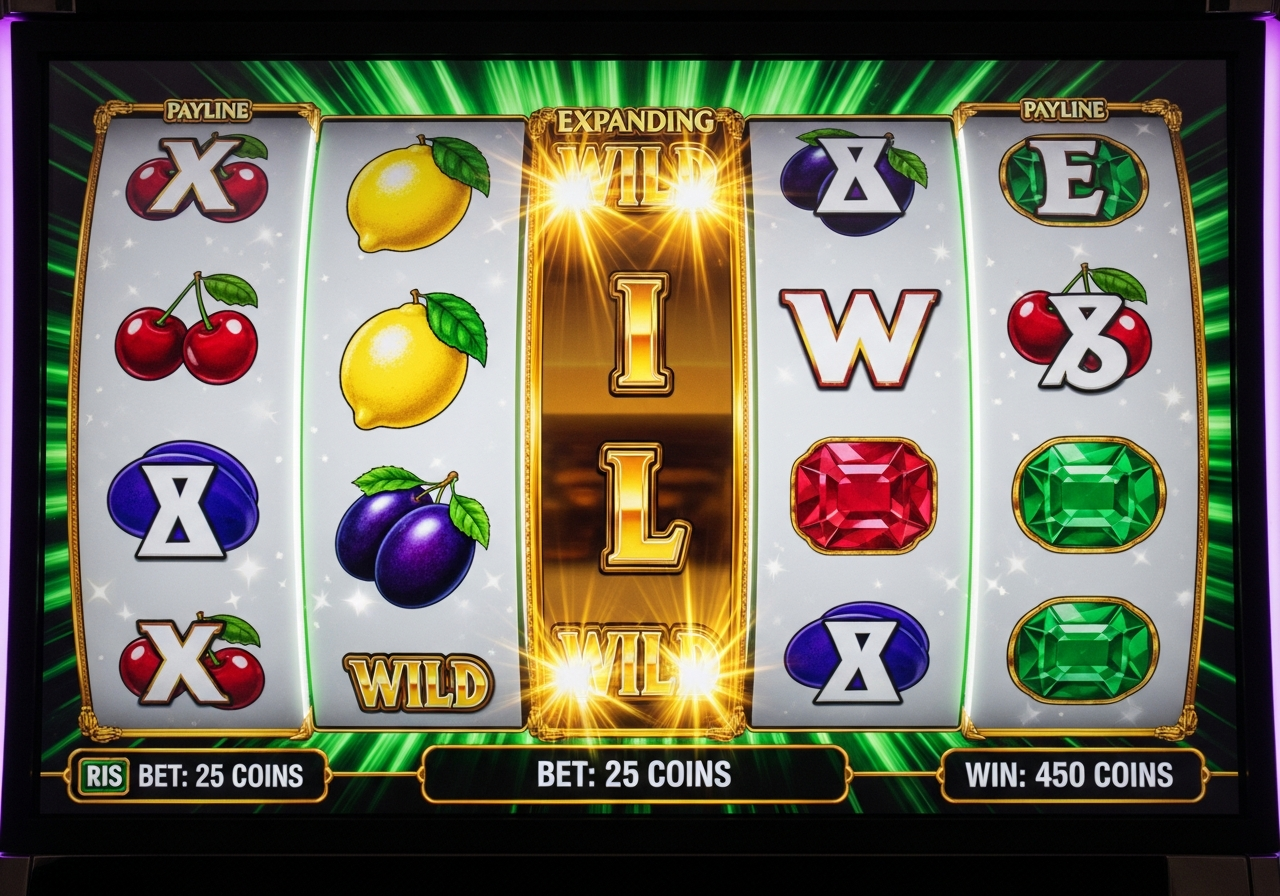
Expanding wilds have become one of the most recognizable and impactful features in modern online slots, offering players the thrill of watching a single wild symbol transform into a much larger coverage area across the reel. Understanding how this mechanic works is essential for anyone looking to make informed decisions about which games to play and what to expect when the feature activates.
In simple terms, an expanding wild is a symbol that can grow beyond its original single position to cover multiple positions on a reel—either vertically, horizontally, or across the entire reel itself. This expanded coverage dramatically increases the number of winning combinations possible in a single spin, which is why the mechanic matters so much in Indian slot games and beyond. The feature creates moments of excitement because players see their potential payout increase in real time as the wild expands before payline evaluation.
Before diving into a slot with expanding wilds, it’s important to set realistic expectations. The behavior of expanding wilds varies significantly from game to game, influenced by factors like reel size, number of active paylines, and the specific rules programmed by the developer. Some expanding wilds cover only one reel position, while others can expand to cover an entire reel. Some trigger randomly, while others require specific combinations or bonus activation. This is why checking the paytable and help section is never optional—it’s the only way to know exactly how the feature will behave in the game you’re about to play.
What Expanding Wilds Are in Indian Slots
An expanding wild is fundamentally a symbol that occupies a single position when it first lands, but then grows to fill multiple positions on its reel. This growth happens after the reel stops spinning but before payline evaluation occurs. The expansion is determined by the game’s programming and follows rules set by the developer, not by any player action or prediction.
The core difference between an expanding wild and other wild types lies in its ability to cover more ground. While a standard wild substitutes for other symbols in a single position, an expanding wild can create winning combinations across multiple positions on the same reel simultaneously. This means a single expanding wild can complete multiple paylines at once, amplifying the winning potential of that spin.
| Feature | Expanding Wild | Typical Slot Effect |
|---|---|---|
| Coverage | Grows from 1 position to multiple positions (vertical, horizontal, or full reel) | Standard wild covers 1 position; expanding wild covers 2–5+ positions |
| Substitution Power | Substitutes for any symbol in all covered positions | Single-position wild substitutes in 1 location only |
| Payline Impact | Completes wins on multiple paylines in a single expansion | Standard wild typically completes wins on 1–2 paylines per position |
| Activation Timing | Expands after reel stop, before payline calculation | Static wilds remain unchanged after reel stop |
| Frequency | Varies by game; some are rare, others appear regularly | Depends on game volatility and RTP distribution |
How the symbol expands on the reels
Expanding wilds can expand in three primary patterns. A vertical expansion means the wild grows upward or downward to cover additional rows on the same reel—for example, a wild landing in the middle row might expand to cover the top, middle, and bottom positions. A horizontal expansion is less common but can occur in games with unique reel layouts, where a wild spreads to adjacent reels.
The most dramatic expansion pattern is a full-reel expansion, where the wild fills every position on its reel. This creates the maximum possible substitution coverage and often triggers the largest payout potential for that spin. Some games limit expansion based on where the wild lands; a wild in the middle row might expand differently than one in a corner position.
The timing of the expansion matters too. Most games show the expansion animation after the reel has stopped spinning, creating a visual moment that builds anticipation. The animation itself doesn’t affect the outcome—the result is predetermined by the RNG before the reel even starts spinning—but it adds to the entertainment value that keeps players engaged.
Why expanding wilds are more powerful than a single-position wild
A single-position wild can only complete paylines that run directly through that one position. An expanding wild, by contrast, can touch multiple paylines simultaneously. Consider a game with 25 paylines and a wild that expands to cover 3 vertical positions on one reel: that single wild symbol might now complete winning combinations on 6, 8, or even 10 different paylines in that one spin.
This simultaneous payline coverage also means that a single expanding wild can create multiple winning combinations of different symbols. If you land the expanded wild next to two separate groups of matching symbols on different paylines, both wins can be calculated and paid in the same round. This multiplier effect is why expanding wilds often produce larger payouts than standard wilds.
The increased match potential extends beyond simple payline completion. When a wild expands, it might also trigger additional features or bonus conditions if the game’s rules link feature activation to wild coverage. Some games offer bonus symbols or free spins only when wilds occupy a certain percentage of the reel, making expanded coverage a gateway to bigger rewards.
How Expanding Wilds Trigger
Expanding wilds don’t activate by player choice; they’re controlled entirely by the game’s random number generator (RNG) and the specific rules programmed into that slot title. Understanding the typical trigger conditions helps players recognize when an expanding wild feature is about to activate and what to expect next.
- Random landing on any spin – The most straightforward trigger. The wild symbol lands on the reel during a regular spin, and if it’s an expanding wild, it expands according to the game’s rules.
- Specific reel position requirement – Some games only expand wilds that land on certain reels (for example, only on reels 2, 3, or 4) or certain rows (for example, only in the middle row). Check the paytable to see if there are restrictions.
- Bonus round or free spin activation – Many games activate expanding wild features exclusively during free spins or bonus rounds, making these features more valuable when you’re already in an enhanced play mode.
- Accumulation of other symbols – A few games expand wilds only when certain other symbols appear on the same spin or adjacent positions, creating a combined trigger condition.
- Feature-specific activation – Some slots have named features (like “Wild Expansion Mode”) that activate under certain conditions and remain active for a set number of spins, during which all wilds automatically expand.
- Respin sequences – In games with respins, landing a wild might trigger a respin during which that wild remains locked and expanded, with fresh reels spinning to land more matching symbols or additional wilds.
Common activation conditions players see
Trigger conditions vary widely, but a few patterns appear across many modern slot titles:
- Random appearance during standard play – The wild lands naturally and expands without any special condition, making it available on every spin you take.
- Enhanced during free spins – Free spin rounds often feature expanding wilds as a core mechanic, while they might be rare or absent during the base game.
- Linked to scatter or bonus symbols – The expanding wild might activate only when you land a specific bonus symbol on the same spin, creating a layered trigger system.
- Progressive or consecutive trigger – Some games expand wilds more liberally as you land multiple wilds in quick succession, building momentum across several spins.
- Feature mode activation – Specific winning combinations or symbol counts might unlock a temporary feature mode where all wilds expand for a defined number of spins.
What Happens After the Wild Expands
Once the wild expands, the game immediately calculates all possible payline wins using the expanded wild as a substitute. The payout is determined and displayed, and the player receives the winning amount in their balance. However, the process doesn’t always end there—some games introduce additional mechanics that extend the feature’s value.
| Step | What the Game Does | Player Impact |
|---|---|---|
| Wild lands on reel | Symbol appears and is identified as an expanding wild | Expansion is about to occur |
| Expansion occurs | Wild grows to cover multiple positions on its reel | Coverage area increases; payout potential rises |
| Payline evaluation | Game checks all paylines against the expanded coverage | Winning combinations are identified |
| Win calculation | All wins involving the expanded wild are added together | Player balance updates with total payout |
| Reel lock (if active) | Expanded wild may remain fixed for respins or free spins | Same wild contributes to multiple reel sets |
| Respin trigger (if applicable) | Game automatically spins remaining reels again | New symbols land around locked wild; extra wins possible |
| Chain reaction (if enabled) | Additional wilds landing during respins also expand | Expansion effect continues across multiple spins |
| Feature completion | Respins end or free spins conclude | Feature pays and regular play resumes |
Reel locking and win calculation
When a wild expands, it typically remains visible on the reel for the duration of the current spin cycle. If the game includes a respin feature, the expanded wild will lock in place, meaning it stays exactly where it is while the other reels spin again. This locked wild continues to substitute for other symbols during the respin, potentially creating additional wins.
For example, in a respin feature, you might land an expanding wild that covers 3 positions on reel 2. That wild locks in place. The other reels then respin, and any symbols that land adjacent to the locked wild can form new winning combinations with it. The locked wild contributes to payline calculations for every respin, maximizing the value of that single wild symbol.
Win calculation with expanded wilds is straightforward: all paylines that pass through any of the expanded positions are checked for valid combinations. If a payline contains the expanded wild plus matching symbols, it wins. Multiple paylines can win from the same expanded wild in a single spin, and all those wins are added together before the payout is displayed.
Respins and chained expansion effects
Respins are a powerful mechanic that pairs well with expanding wilds. During a respin sequence, the game locks certain symbols (usually expanding wilds) in place and spins the remaining reels to generate new symbols. If the respin lands additional wilds that also expand, you get a chain reaction effect where multiple expanded wilds now work together on the reel.
Imagine a game where you land an expanding wild on reel 3 during a respin feature. That wild expands to cover 3 positions and locks. The game gives you a respin, and the other reels spin. If another wild lands on reel 4 during that respin, it also expands and locks. Now you have two expanded wilds locked in place, and the remaining reels get another respin. This cascading effect can continue until no new wilds land, creating significant payout potential as the number of locked expanded wilds accumulates.
The RNG determines whether additional wilds land during respins, so there’s no way to predict or control how long a respin sequence will continue. However, the visual progression of locked wilds stacking up on the reel creates the excitement and engagement that makes this feature so popular.
Paylines, RTP, and Winning Potential
Expanding wilds have a substantial impact on both the hit frequency and the size of wins in a slot game. Because a single expanded wild can complete multiple paylines, games with expanding wilds tend to produce more winning spins than similar games without the feature. This increased frequency can make the game feel more rewarding, even if the average payout per win remains consistent with the game’s RTP.
| Mechanic | Effect on Wins | What Players Should Check |
|---|---|---|
| Expanded coverage area | Increases payline completion; multiple wins per spin become more likely | Paytable notation: how much can the wild expand? |
| Reel restriction rules | Limits where wilds can expand, affecting win frequency | Help screen: do only certain reels allow expansion? |
| Simultaneous payline wins | Single wild can complete 3–10+ paylines at once | Paytable: show examples of multi-line payouts |
| Respin availability | Locked wilds generate secondary spin chances; extended feature playtime | Help screen: how many respins are possible? |
| Wild symbol weighting | More frequent wilds = more expansion opportunities | Game info: wild appearance rate (if disclosed) |
| Volatility classification | Expanding wilds increase variance; larger swings in results | Review site data: is this high-volatility game? |
| RTP and payout distribution | Feature influences how payouts are distributed across the RTP | Operator: what is the stated RTP range? |
How paylines interact with expanded coverage
In a standard 5-reel slot with 25 paylines, each payline runs from left to right across the reels in a specific pattern—some go straight across the middle, others zigzag through the top and bottom rows. When a wild expands vertically to cover 3 positions on one reel, it now intersects with more paylines.
A wild in the top position of reel 3 might touch only 8 paylines. But if that wild expands to cover the top, middle, and bottom positions, it now touches 24 or 25 paylines. Every payline that passes through any of those 3 positions can now use the expanded wild to complete a winning combination.
This multiplicative effect is why expanding wilds can generate payouts that seem disproportionately large compared to the wild symbol’s individual payout value. The value comes from completing so many paylines at once. If each completed payline pays 10 coins, and one expanded wild completes 15 paylines, the total payout from that expansion is 150 coins—a significant sum from a single symbol.
The interaction becomes even more powerful when multiple matching symbols are also present. An expanded wild next to 3 matching scatter symbols might complete paylines containing that symbol group, effectively multiplying the scatter payout across several lines. This is why players who understand payline mechanics often see higher perceived wins from expanding wild features.
Expanding Wilds vs Other Wild Types
Expanding wilds are just one variant in the broader category of wild mechanics used in online slots. Understanding how they compare to other wild types helps players choose games aligned with their preferences and expectations.
| Wild Type | Core Behavior | Persistence | Typical Use Case |
|---|---|---|---|
| Expanding Wild | Grows from 1 position to multiple positions after landing | Short-lived; active for current spin only (unless respins lock it) | Bonus features, free spins, high-volatility base games |
| Sticky Wild | Lands and remains in place across multiple spins | Long-lived; persists for 2–10+ spins or until feature ends | Respin rounds, free spin features, progressive features |
| Stacked Wild | Multiple wild symbols appear pre-stacked vertically on one reel | Present only during that spin; stacked appearance happens at reel stop | High-volatility games; common in free spins |
| Standard Wild | Substitutes for any symbol in a single position | Single-spin duration; disappears after payline evaluation | Base game standard feature; all game types |
| Walking/Shifting Wild | Moves to an adjacent position after each spin | Multi-spin persistence; progresses across the reel set | Adventure-themed slots; themed features |
| Multiplier Wild | Increases the payout of wins it contributes to (2x, 3x, 5x, etc.) | Single-spin duration unless locked in respin | Multiplier-focused games; high-payout events |
Expanding wilds vs sticky wilds
The key difference between expanding wilds and sticky wilds lies in persistence and mechanism. An expanding wild grows in size but typically exists only for the spin it lands on. A sticky wild might remain much smaller in coverage area but can stay locked in place across multiple consecutive spins.
In terms of payout potential, an expanding wild creates a single large win by covering many paylines at once. A sticky wild creates multiple chances for wins across several spins by remaining in place while new symbols land around it. A sticky wild might contribute less per individual spin but accumulate larger total payouts over the course of a respin sequence or free spin round.
Sticky wilds are often more common in respin features because their persistence aligns naturally with the mechanic. Expanding wilds, by contrast, work best in free spin rounds where the expansion happens once and contributes its full value immediately. Some games combine both mechanics: a wild might expand, then become sticky, then remain locked for additional respins.
Expanding wilds vs stacked symbols
A stacked wild is a pre-programmed reel presentation where multiple wild symbols already occupy the same reel, one above the other. They appear as a “stack” from the moment the reel stops spinning. This is different from expansion, which happens after the individual wild symbol lands—the wild starts alone and grows to cover multiple positions.
The outcome can appear similar on the screen, but the underlying mechanics are different. With stacked symbols, the developer has decided in advance that those symbols will occupy multiple positions together. With expanding wilds, a single symbol transforms after landing. Stacked symbols are a reel design choice; expanding wilds are a dynamic animation triggered by specific rules.
Stacked symbols typically appear more frequently in base games and are viewed as a reel design feature. Expanding wilds are positioned as feature mechanics and are often restricted to bonus rounds or rare base game occurrences. From a player perspective, both create large coverage areas and multi-payline wins, but expanding wilds tend to feel more rewarding because the expansion animation builds anticipation.
Game Design Factors That Change the Feature
Two slots can both feature expanding wilds, but because of different design choices, they might play very differently. Several underlying factors determine how impactful the expanding wild mechanic is in any given game.
- Reel configuration – Games with 3 reels, 5 reels, 6 reels, or even 7+ reels all handle expansion differently. Wider reels mean more positions available to expand into, creating larger potential coverage areas.
- Number of active paylines – A game with 9 paylines experiences expanding wilds differently than a game with 243 ways to win. More paylines mean a single expanded wild touches more winning combinations.
- Symbol size and reel position restrictions – Some games allow expansion only in certain positions or only on certain reels. A wild that expands only on reel 3 has different value than one that expands on any reel.
- Wild frequency weighting – The underlying RNG probability of landing a wild symbol determines how often the expansion feature occurs. Rare wilds mean the feature is special but uncommon; common wilds mean expansion happens frequently.
- Expansion size limits – Some games cap expansion at 3 positions; others allow full-reel coverage. The maximum possible coverage determines the ceiling for single-spin payouts.
- Feature interaction with other mechanics – Whether expanding wilds trigger respins, lock in place, or chain with other wilds dramatically changes how the mechanic performs in gameplay.
- Free spin vs base game rules – Many games have different expansion rules for the base game versus free spins, with free spin versions often expanding more generously or frequently.
Design variables that matter most
From a player experience standpoint, certain design variables matter more than others when evaluating how impactful an expanding wild feature will be:
- Maximum expansion coverage – The largest possible area the wild can cover directly determines the biggest single payout possible from the feature. Full-reel expansion creates higher ceiling payouts than 2- or 3-position expansion.
- Frequency of wild landings – How often the symbol appears determines how regularly you’ll experience the feature. High frequency keeps the feature active; low frequency makes it feel special but uncommon.
- Presence of locked respins – Respins that lock the expanded wild in place extend its value across multiple reel spins. This mechanic dramatically increases feature payout potential compared to single-spin expansion.
- Availability in base game vs bonus only – Expansion available during all spins creates more engagement than expansion restricted to free spins. However, base game expansion is typically more limited to balance game volatility.
- Chain reaction potential – Games allowing multiple wilds to expand and lock during respin sequences offer exponentially higher payout ceilings than single-wild-per-round games.
- Interaction with scatter or bonus symbols – When expanding wilds work in conjunction with other features, they multiply the value of those features. Isolation limits their impact.
How to Read the Paytable and Help Screen
Before playing any slot with expanding wilds, spending a few minutes reviewing the paytable and help documentation is essential. This is where the developer discloses the exact rules governing how and when the feature activates, what restrictions apply, and what payouts are possible.
The paytable is the authoritative source for game rules. While the visual presentation might be colorful and simplified, the information is legal and binding. If the paytable doesn’t mention a rule, the rule doesn’t exist. If the paytable says expansion is limited to reels 2–4, then reels 1 and 5 will never produce expanding wilds, regardless of how the game appears during play.
Many players skip the paytable, assuming they understand the game after a few spins. This is a costly mistake with complex features like expanding wilds. The difference between a game where wilds expand during all spins versus only during free spins changes your expected payouts dramatically over time.
Key paytable items to verify
Before wagering real money on a slot with expanding wilds, confirm these specific details:
- Activation requirements – Does the wild expand randomly, or only under specific conditions (bonus round, scatter landed, specific reel)?
- Expansion coverage limits – What is the maximum number of positions the wild can cover? Does this differ by reel or position?
- Reel or position restrictions – Are certain reels excluded from expansion? Can only wilds in the middle row expand, or can any position expand?
- Free spin enhancement – If the feature appears in free spins, does it expand more frequently or to a larger size than in the base game?
- Respin availability – After expansion, are respins offered? If yes, how many respins can occur, and what happens if new wilds land?
- Symbol exclusions – Are there symbols the wild cannot substitute for, or positions it cannot occupy?
- Payout examples – Does the paytable show example wins involving expanding wilds? Use these to understand realistic payout levels.
- Feature volatility notes – Some paytables note whether expanding wild features increase or decrease overall game volatility.
What the help screen reveals about restrictions
The help screen often provides more detailed operational information than the paytable summary. This is where you’ll find clarification on edge cases and specific behavior rules.
Look for notes about what happens when an expanding wild lands on a position already occupied by a bonus symbol or scatter. Can the wild expand if a scatter is present? Does the scatter take precedence? These interactions matter because they determine whether the expanding wild and other features can work together on the same spin.
The help screen also clarifies timing: does the wild expand before or after other features activate? If you land a scatter that triggers free spins and a wild on the same spin, which feature activates first? The order determines what happens next and what wins are calculated.
Check for any mention of special reel rules, such as “expanding wilds only appear on reels 2, 3, and 4” or “expanding wilds cannot land on the top row during base game spins.” These restrictions fundamentally shape how frequently the feature impacts your results.
Practical Strategy and Player Expectations
Expanding wilds cannot be influenced, controlled, or predicted. The feature is entirely random and determined before the reel animation even begins. However, understanding realistic expectations helps you play responsibly and appreciate the feature for what it actually is rather than what hope might suggest it could be.
- Expanding wilds are RNG-driven, not skill-based – No betting strategy, bankroll management tactic, or timing choice influences when or how often the feature activates. It’s pure randomness.
- Volatility increases with expanding wild features – Games offering larger expansion coverage and respin chains tend to have higher volatility, meaning bigger swings between wins and losses over time.
- Feature activation variance is normal – In one session, you might see expanding wilds frequently; in another, you might not see them for dozens of spins. This is expected variance, not a sign the game is “due” or “broken.”
- Set a realistic bankroll expectation – Because expanding wild features can generate large payouts, some players chase the feature by playing higher stakes. Ensure your bankroll can sustain normal variance without forcing you to quit due to budget limits.
- Free spins with expanding wilds have different payout potential – If you trigger free spins and the feature is more generous there, expect different long-term results from free spins versus base game play.
- The feature does not guarantee profitability – Expanding wilds create exciting moments, but they operate within the overall RTP and cannot create positive expected value from a negative-expectation game.
What players can and cannot influence
Players can decide which game to play, how much to wager per spin, and when to stop playing. Players cannot influence the RNG, cannot predict when wilds will land, cannot control how large they will expand, and cannot extend respins beyond what the RNG produces.
The feature is entirely determined by the game’s mathematical model and the RNG engine powering it. Once you’ve pressed the spin button, the outcome is locked in. The animations you see—the reel spinning, the wild expanding, the respins triggering—are purely visual representations of that pre-determined result. They do not influence the outcome; they simply show it to you over time.
Some players believe that the pace at which they click, the time of day they play, or special betting patterns affect the feature activation. None of these factors matter. The RNG operates independently of any player action or external timing. Expanding wilds happen randomly according to the game’s programmed rules, period.
Understanding this boundary between player agency and pure chance helps you enjoy expanding wild features as entertainment rather than as a strategy opportunity. The excitement comes from the unpredictable nature of the feature, not from any method you can employ to trigger it. That unpredictability is also what makes responsible limits on time and money essential when playing slots with rewarding mechanics like expanding wilds.